Public Art of Livermore History
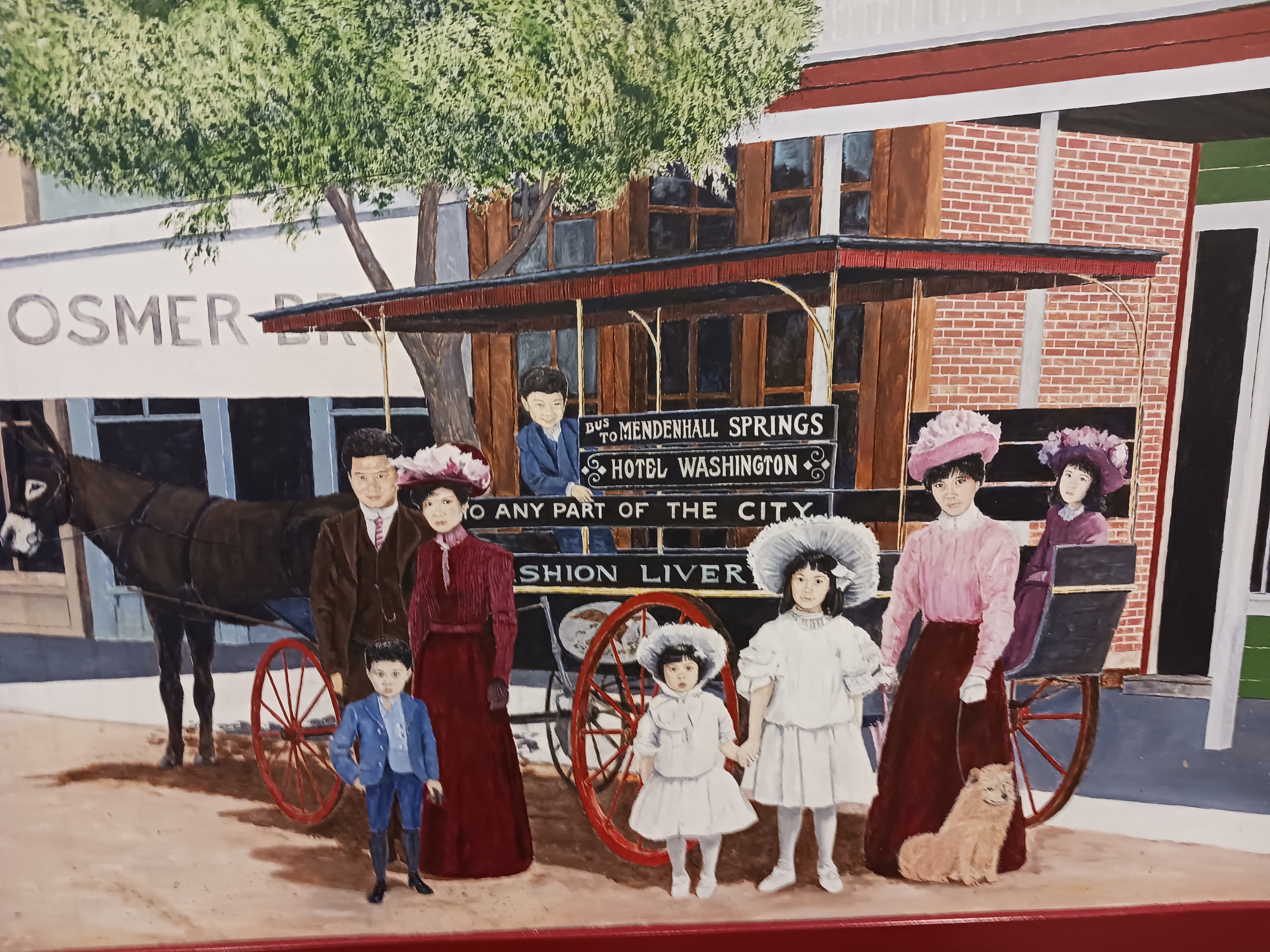
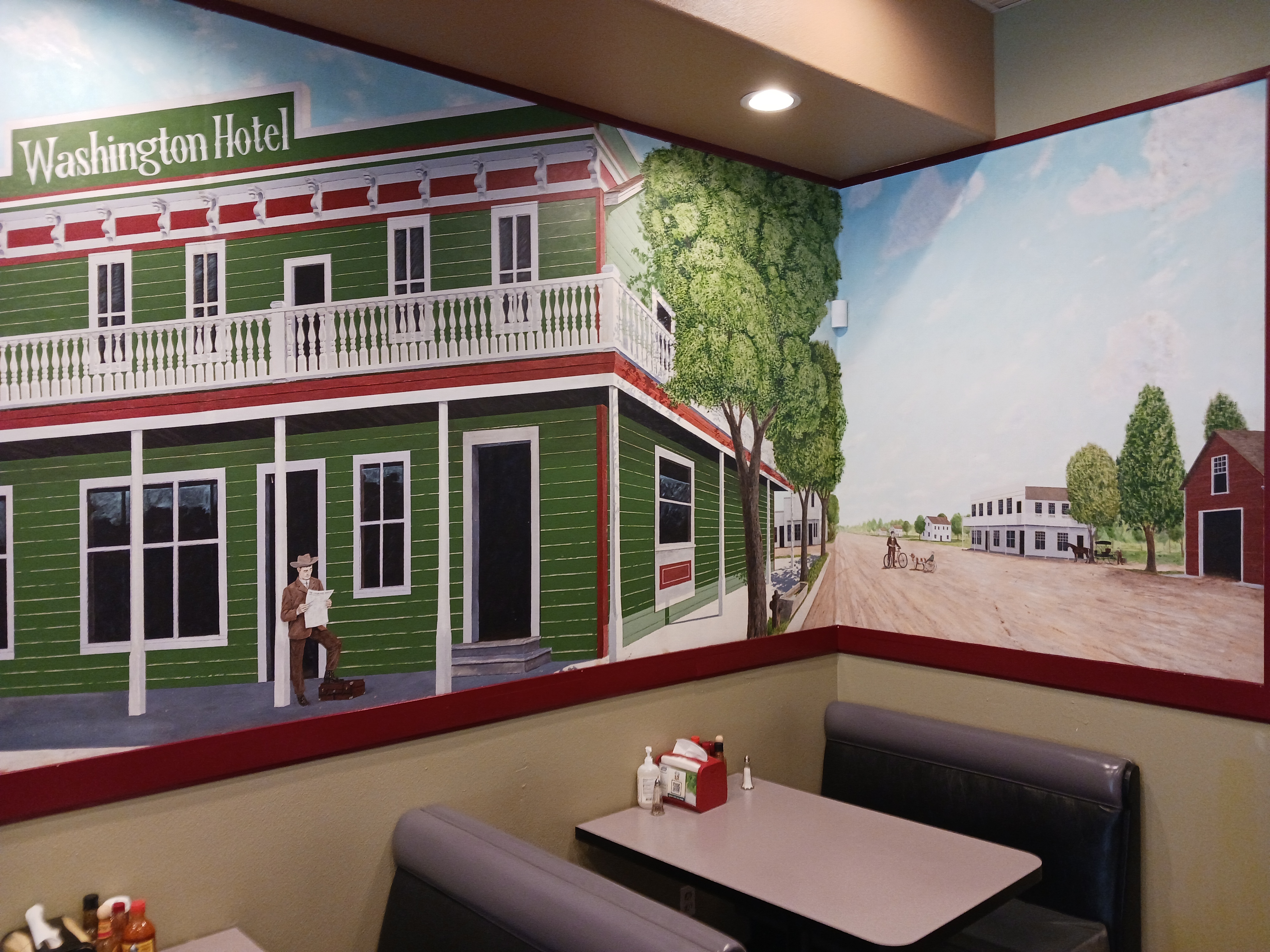
Downtown Cityscape Mural of late 1800s inside Los Caporales Taqueria (2118 First Street) as if you stood in the intersection of "L" Street (north at left to south at right) and First Street (looking east)
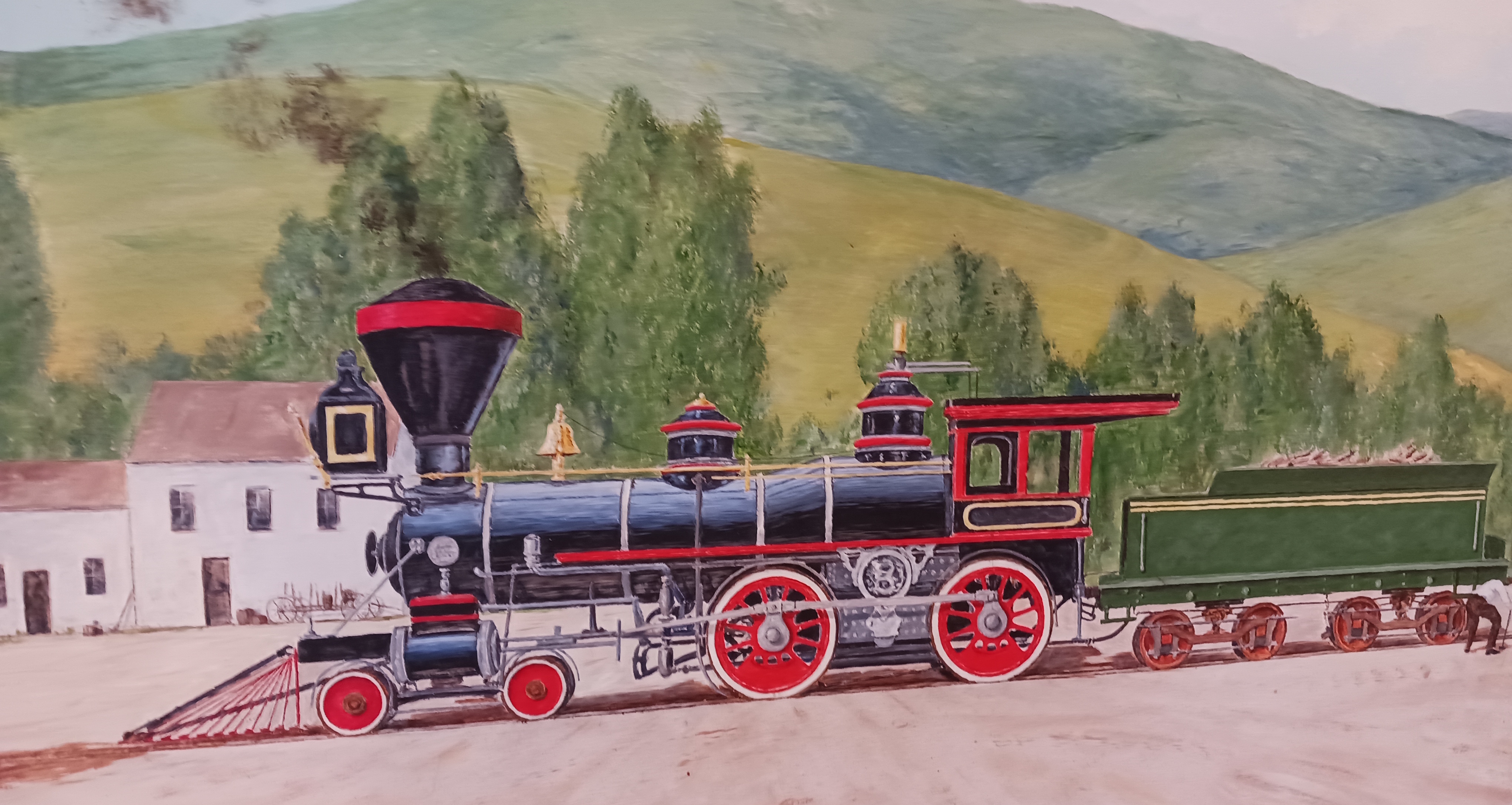
Southern Pacific Railroad Depot (at original L Street location)
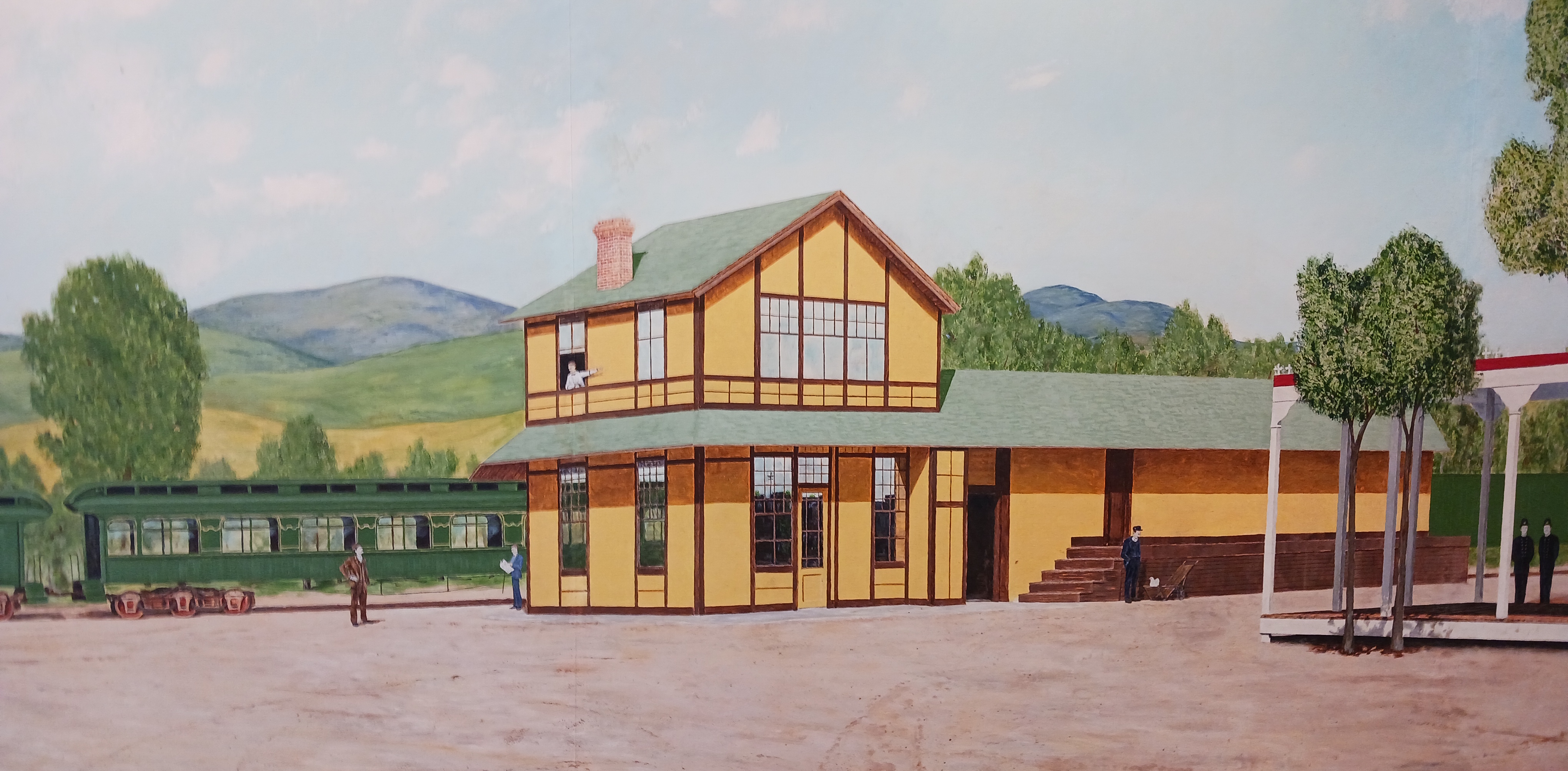
Looking East down First Street from L-Street intersection
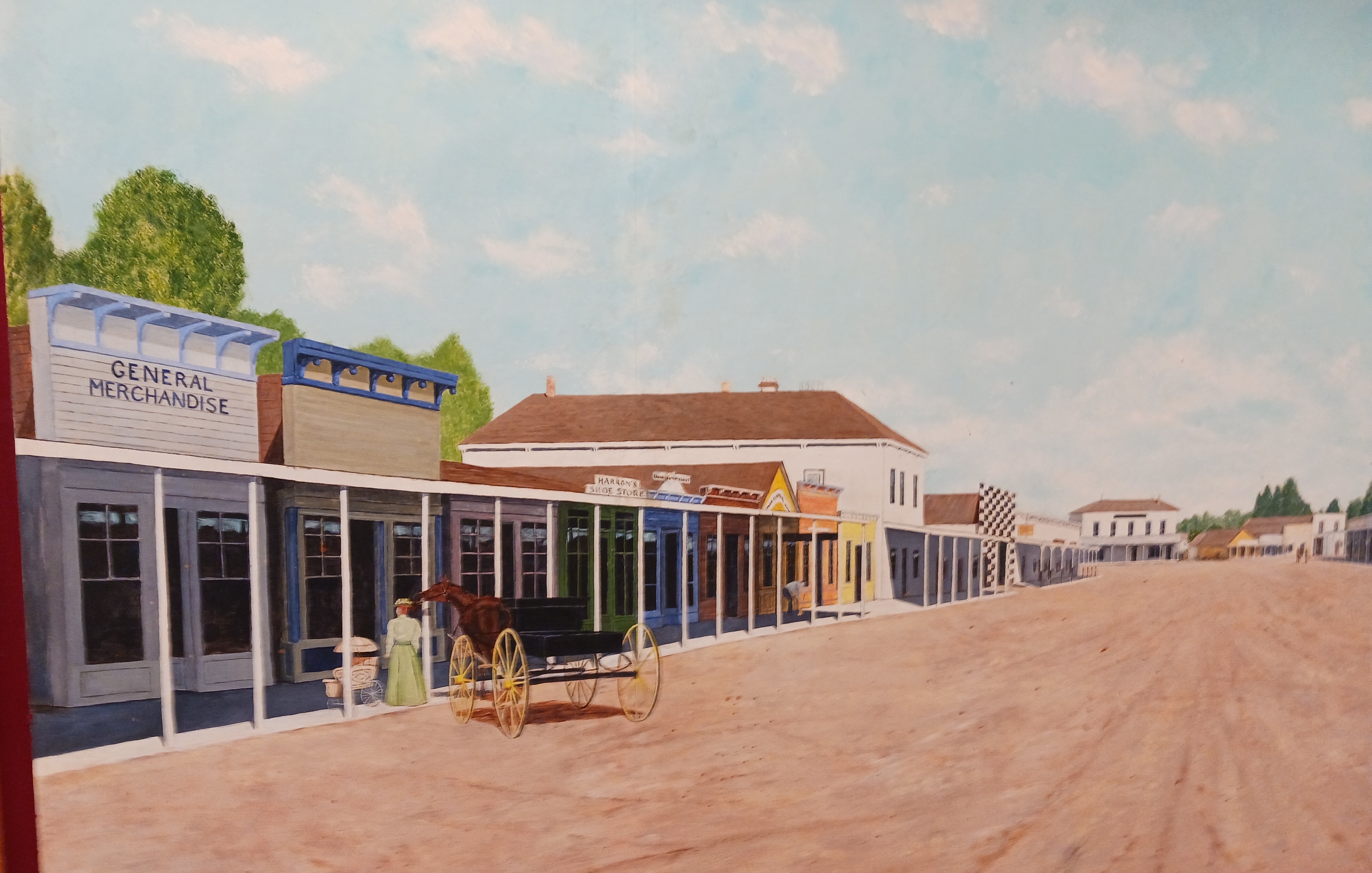
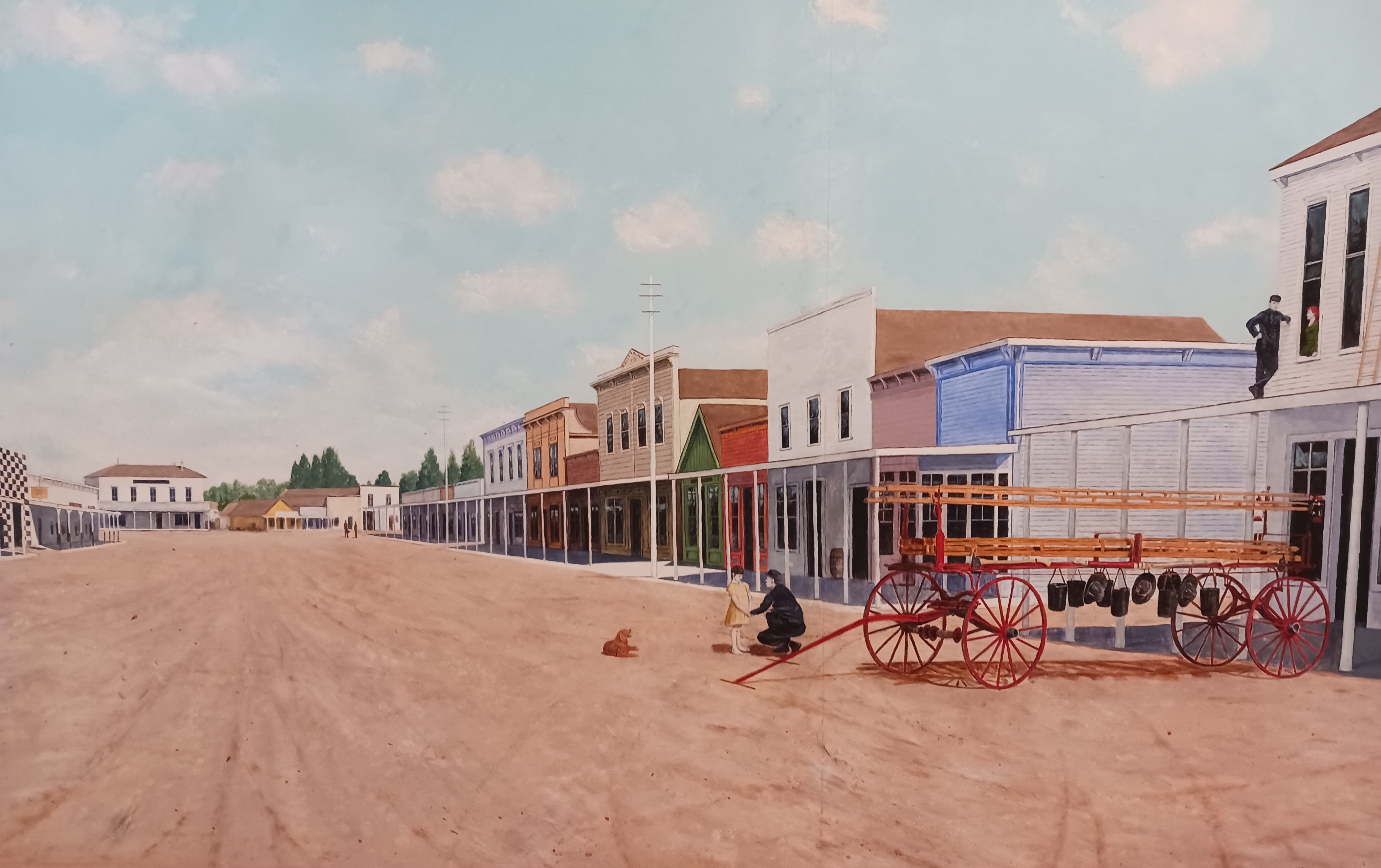
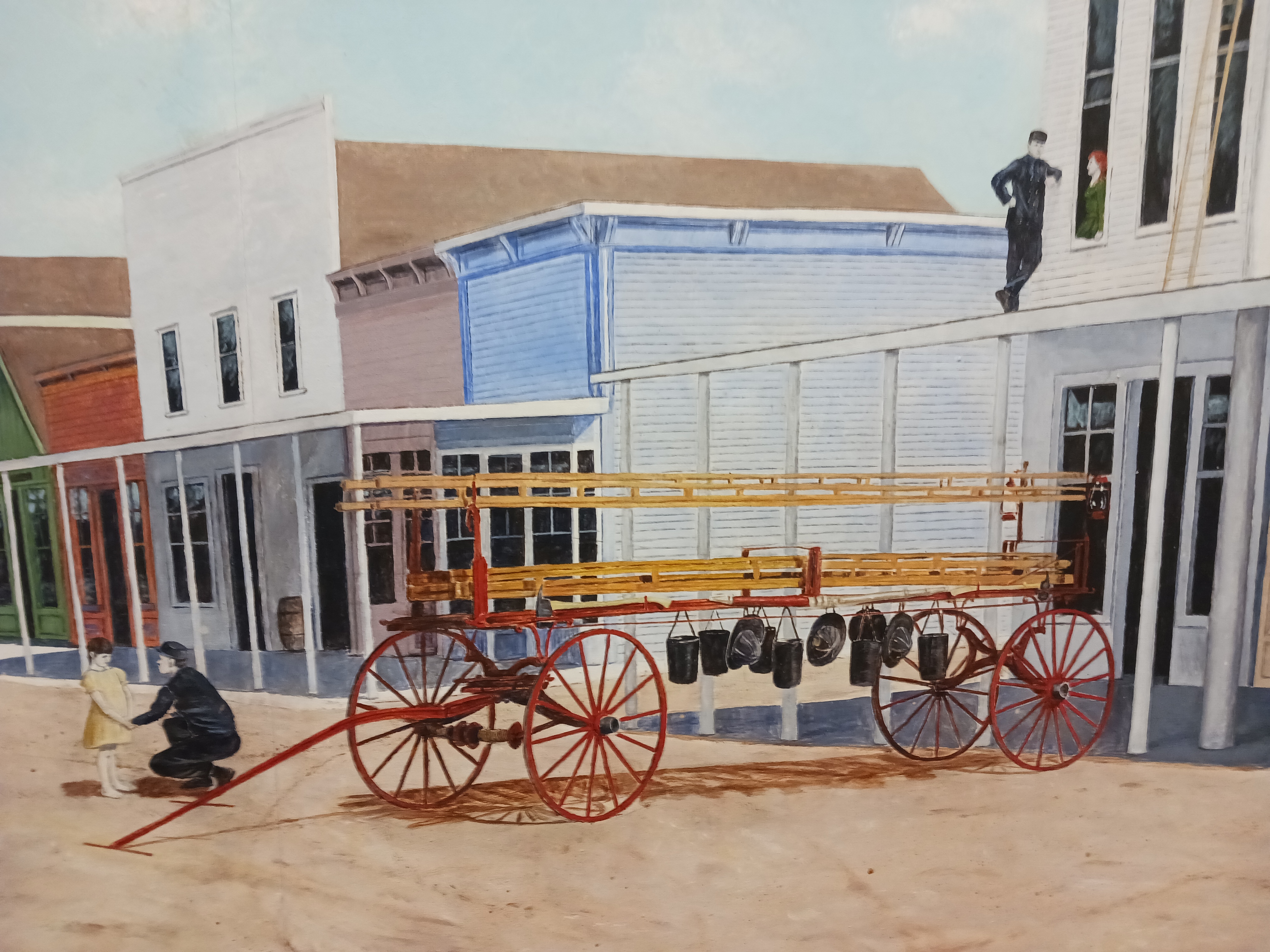
Zoom-in of First Street (Right side)
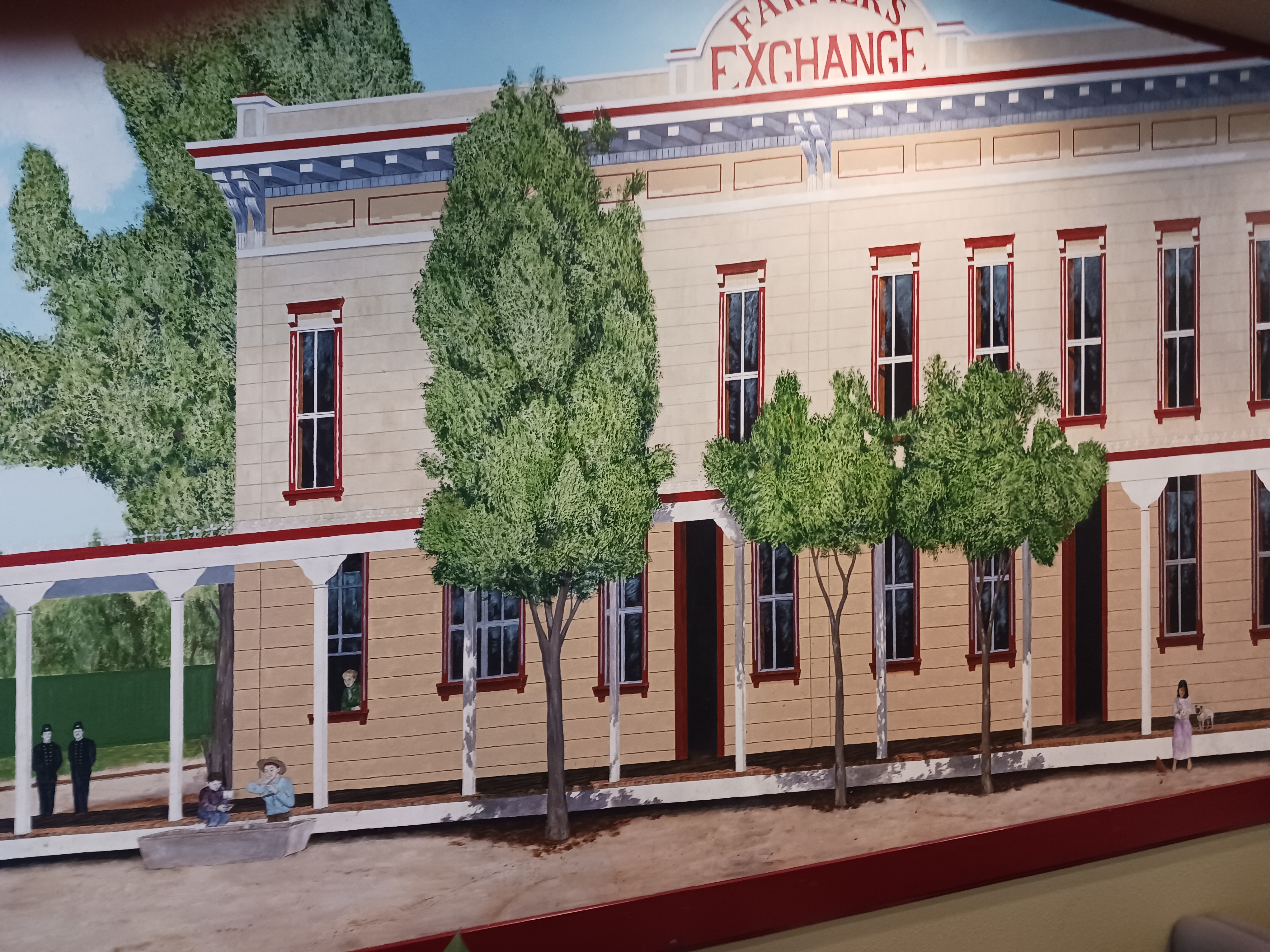
Hotels on L-Street (Farmers Exchange adjacent to the SP Depot and Washington Hotel)
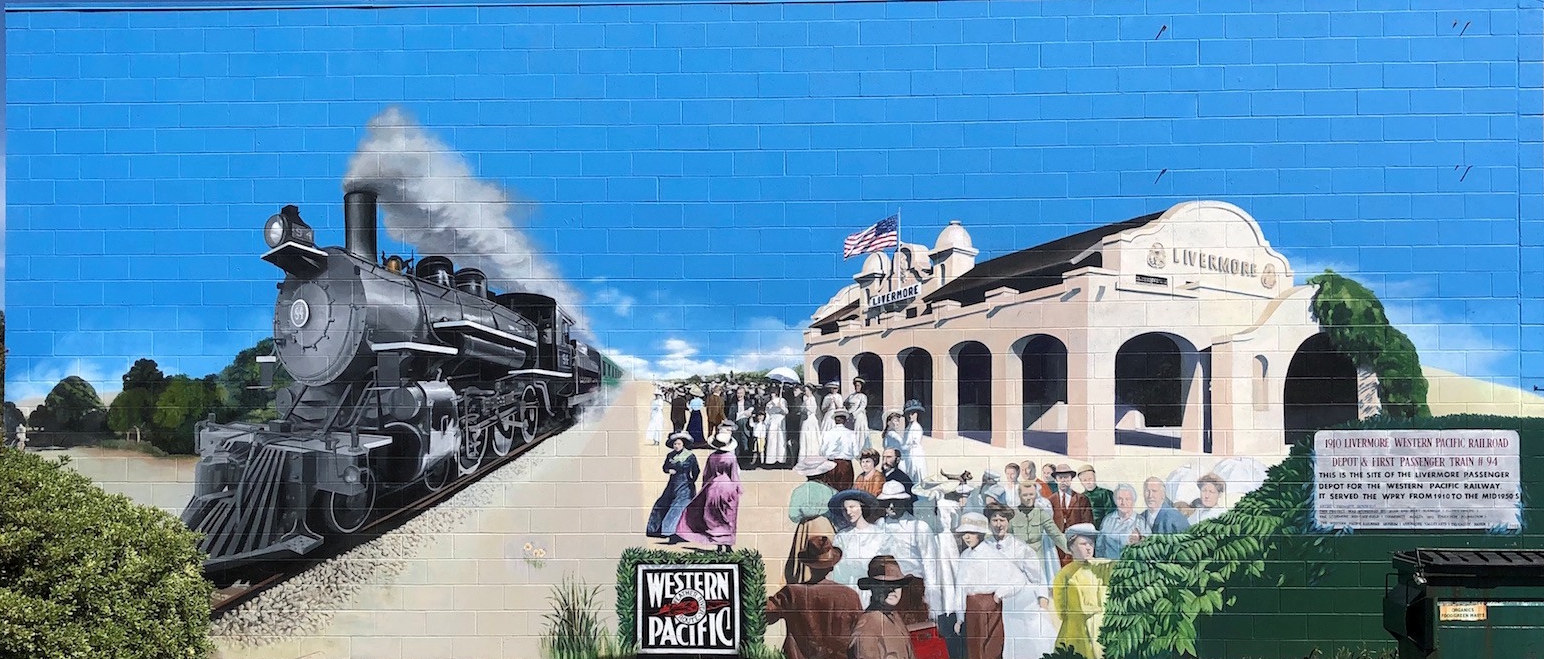
At former site of the Western Pacific Passenger Depot in 1910 showing its first passenger train #94 (north of Tri-Valley Haven thrift shop adjacent to railroad tracks). Painted on west side of Allen's Towing building, facing L Street at back of parking lot. Hidden by trees. Artist: Thomasin Dewhurst.
In September 2010, the Livermore Commission for the Arts unveiled the Firehouse Mural on the east wall of the historic Old Firehouse/City Hall (2369 First Street near The Independent building). Built in 1882, it was a bank and then a boarding house before jointly accommodating City Hall and Fire Department in 1936.
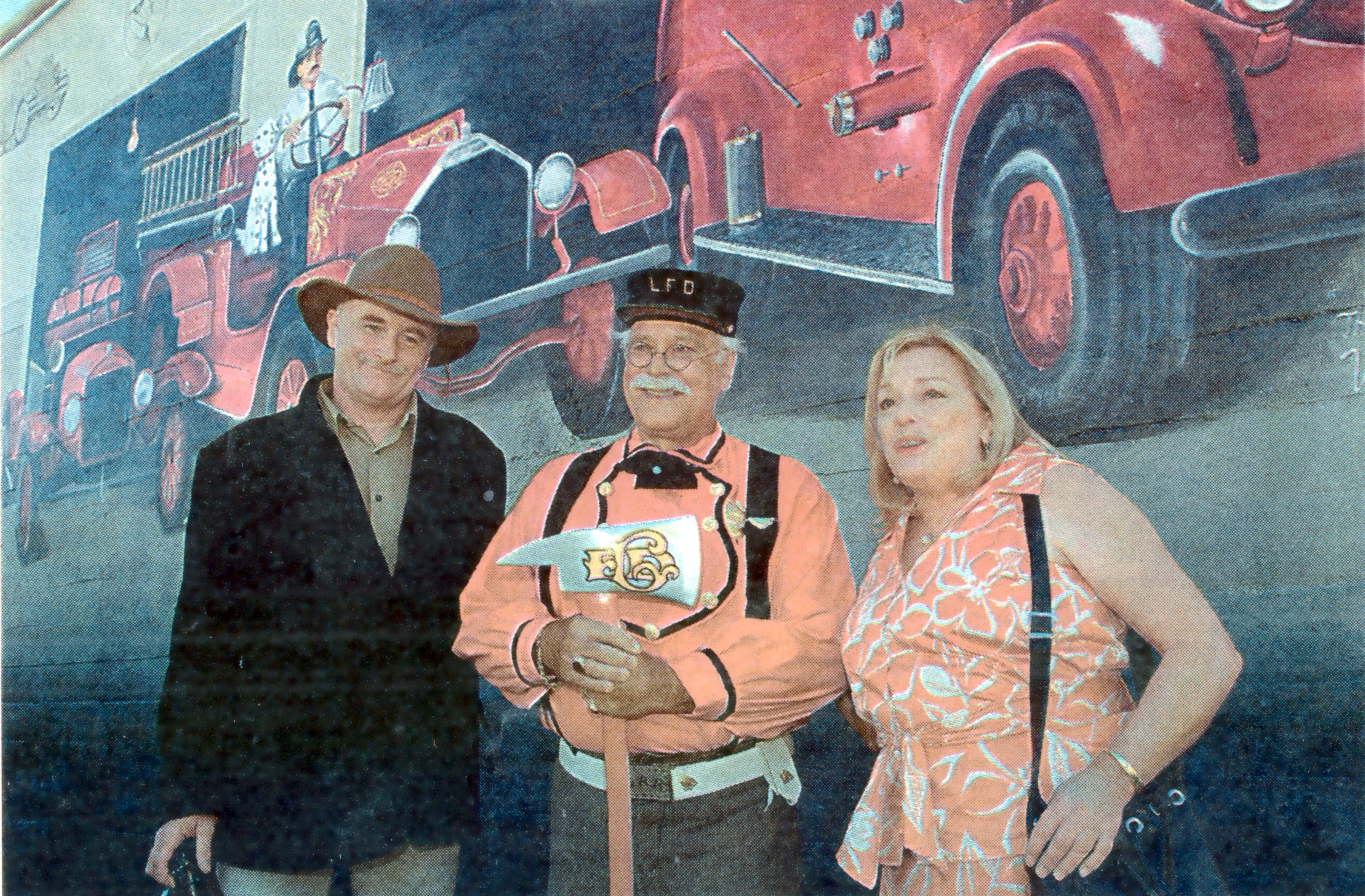
Artists: Kean Butterfield (L), Vera Lowdermilk (R), with retired firefighter Lynn Owens. (9/2010) This Wall - By Charan Sue Wollard, 9/2010
Livermore Poet Laureate for the unveiling:This wall has heard, the sounds of shouts and clanging iron bells, of dread and hope, of sirens deep in the night Inside, the volunteers are vigilant, inside, the wagons wait, illuminated by one dim bulb shining through decades This wall has seen yellow flames, flash through surrounding skies Brigades of brass-buttoned men leap from dead sleep, rush the carriages, water buckets, pumpers, hoses in tow This wall remembers the brave returning, backs slumped with weariness, faces sooted with sorrow This wall remembers the fallen who never returned And now this wall stands witness to past and present, its rough finish smoothed with vibrant colors, a testament to everything this wall has known
Western Wall at 2205 1st St. Artist: Simone Archer
Wine Country and History Wall, cermaic tile, 144 South J Street, dedicated to the City in memory of artist Diane Taasevigen 1946-2006, funding patrons names are on 3 layers of bricks below the mural.
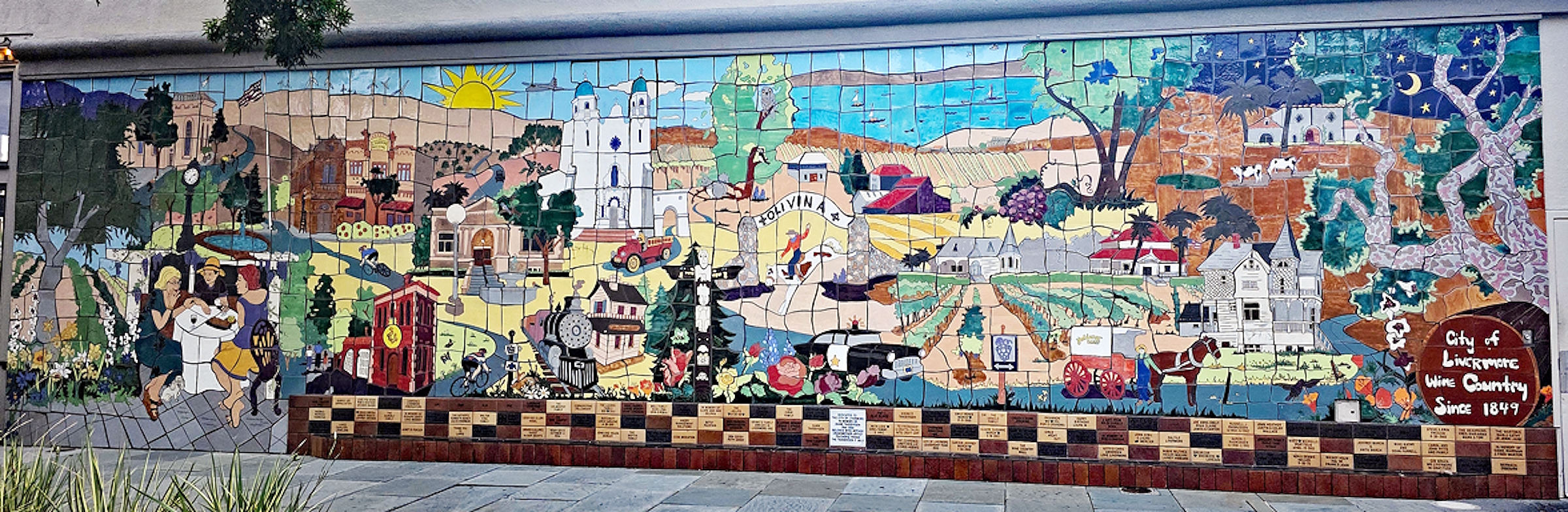
"This beautiful piece is on the exterior of Strizzi’s Restaurant. Diane Taasevigen was a passionate artist and ceramicist. She worked to increase public art. Frustrated by the stark bare wall outside her studio, she envisioned a grand, colorful community project that celebrated the rich heritage of the Livermore Valley. The concept, design, and vision were by Diane. [But,] it was a massive collaborative [of] local artists, the City of Livermore, and Livermore Downtown Inc. Tragically, Diane passed away in 2006, weeks before the project finished. The community rallied to complete and dedicate the mural in November 2006." - Glenn Stewart 6/2026 (photo and extract)
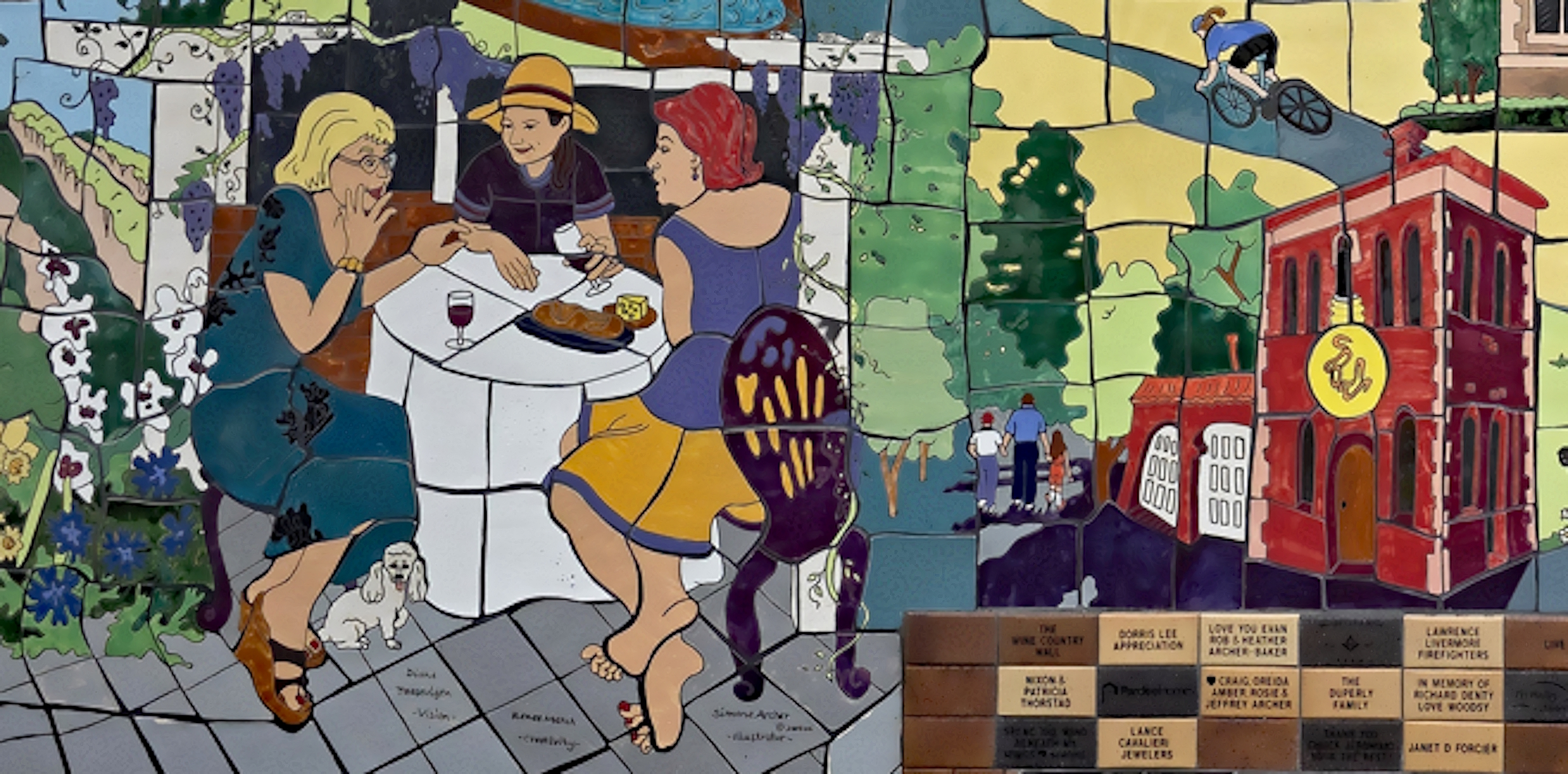
Left side: "The three figures enjoying wine [were] the driving forces (left to right): Diane Taasevigen (noted on text below them as "Vision"), local advocate Roxanne Manger ("Creativity"), and Simone Archer ("Illustration"), who helped bring the final drawings to life." - Glenn Stewart 6/2026 (photo and extract)... To their right, the longest lasting lightbulb (125th anniversary in 2026) overlays the brick former firehouse and city hall (2369 First Street) prior to its current stucco exterior.
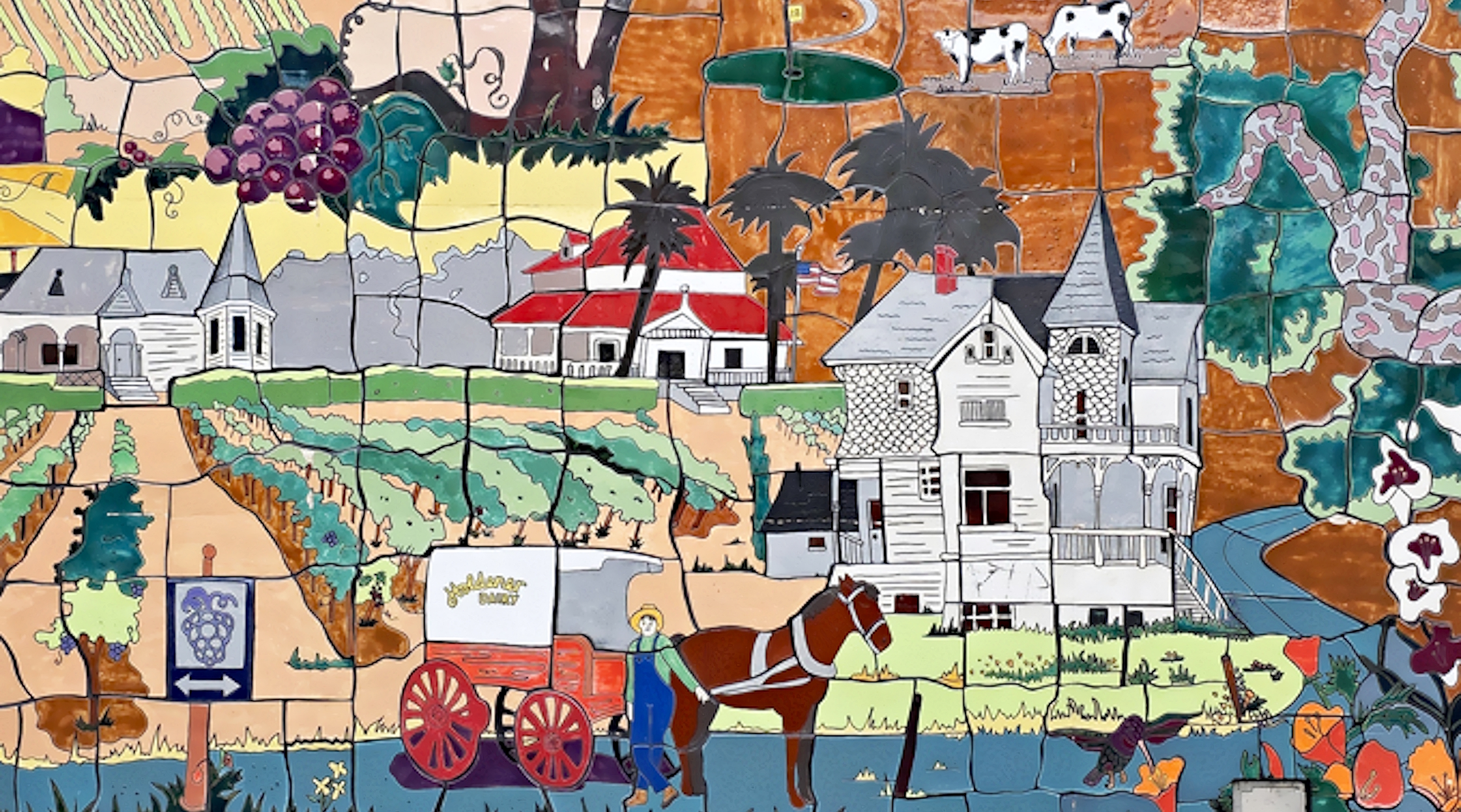
Right side: Ravenswood Historic Site (2647 Arroyo Road), Holdener Dairy (1931-1980, visit Holdener Park at end of Hansen Road), and the Dr. Cameron Gordon house (first indoor plumbed bathroom), as moved to Concannon Winery. The 18th Green represents two championship golf courses south of town (PGA Wente Winery 1998 and NCGA Poppy Ridge 1996/2025). The far right is a Sycamore tree (not a python) at Sycamore Grove Park.
Photo collage on east-side upper interior walls of Wells Fargo Bank, Second Street
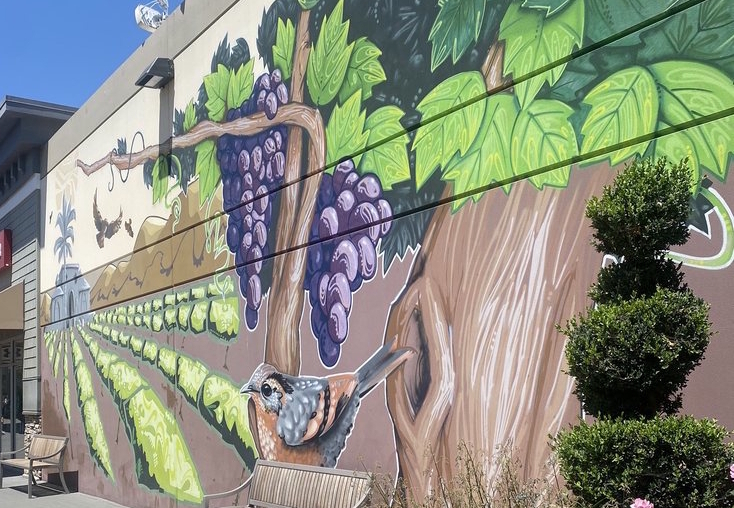
Livermore Vineyards, 3190 Livermore Outlets Dr, This mural is next to a retailer that sells athletic shoes. This is a miniature depiction of what a typical grape growing operation resembles.
The "Totem" Pole
Back in 1969, a shopping center hired a Native American woodcarver Adam Fortunate Eagle Nordwall, wearing Plains Indian regalia, to carve a totem pole reflecting Livermore. See our YourTube channel for the film A Century of Progress (1869-1969) with a segment of the 1969 grand unvieling by the carver at the shopping center. It was a marketing tool while being carved. Incredibly, the shopping center refused to pay the carver.
The carver gave the pole to the City which placed it in Centennial Park into a dirt hole. Obviously, this rotted the base. The City trying to preserve the rest of the pole, cut off the lower symbolic rings on the base, each representing 10 years. The carver became incensed and pronounced a curse upon our City sewer system unless the pole parts were rejoined. With a subsequent sewer backup, the City rejoined the two parts and mounted the pole on a cement pedestal to protect it as best able. The irony is that the carver was not from a tribe that carved totem poles and none of the Bay Area tribes used totem poles. The northwest coastal tribes of Washington and British Columbia would not lay any claim to it being a real totem pole. However, it became a beloved symbol of Livermore for commuters driving home north using the old Highway 84 alignment (Holmes Street).
A real northwest totem pole must decay and eventually decompose. After 50 years exposed and unprotected to weather and termites, our pole was well into the decomposition stage and became in danger of falling. It currently rests on its side in the City Engineering yard. It is not repairable as a self-sustaining upright pole.
The Livermore Heritage Guild has been in consultation with the City for over two years and our proposal is currently in the Arts and Beautification commission. We have an 18-foot redwood log donated, the approved design, and the carver in hand. It cannot be called a totem pole and none of the American Indian representatives we consulted signed off on any of the proposed Native American images. The beaver in particular, as a sacred symbol, could not be used.
So, we took to calling the pole a Centennial Sculpture, carved on three sides, leaving the back side with the bark intact. The eagle remains, Robert Livermore remains (hopefully no longer nude), the cluster of grapes remains, and the atomic symbol remains. Other carved images have been added. We hope the City approves its placement back in Centennial Park.If you want to move this two-year cycle of design along, please contact the Beautification Commission. Some nearby neighbors even offered their front yards for the pole if the City will not build a replacement pedestal at Centinnial Park